Romance scams after 55: intelligence was never the issue
The strongest ones don’t begin with a request for money. They begin with six months of someone remembering your grandchildren’s names.
Romance fraud is the easiest kind to feel superior about from the outside. That is precisely what makes it work.
The caricature says the victim must have been lonely, naive, or not paying attention. The actual mechanism is long-form social engineering, run patiently by people who do this professionally, and it is closer to how intelligence services cultivate an asset than to anything you'd recognize as a con.
It is also, year after year, among the highest-loss categories of consumer fraud reported to the FTC. Not because a lot of people lose a little. Because some people lose everything.
Why it works on capable people
A romance scam never asks you to believe one ridiculous thing. It asks you to accept several hundred entirely believable things, spread across months.
Good morning texts. Genuine interest in how the appointment went. Remembering the dog's name, and your daughter's new job, and that you don't like being called “dear.” Photos. Setbacks that make the person seem more real, not less. A history accumulates — and that history becomes evidence.
By the time money enters, the question in your head is not should I send money to a stranger? That question would be easy. The question is should I help someone I've known for eight months? — and that question is hard, because for almost everyone, in almost every other circumstance, the generous answer is the right one.
The scam doesn't attack your judgment. It builds a relationship first, then asks your judgment to evaluate the relationship.
Why this stage of life creates specific openings
Not gullibility. Circumstance, and arithmetic.
People in their late 50s and 60s may be dating after a divorce or a death, at an age when the old ways of meeting people — work, mutual friends, the school gate — have quietly closed. Online is where it happens now, for everyone. And this age group has, on average, more accumulated assets than a 30-year-old.
That's the whole story. More reason to be looking, fewer natural channels, and a bigger prize for the criminal. The target selection is economic.
Also on The Second Half Guide The big trip, done right Not where to go — you know where you want to go. The logistics that decide whether the trip you have been imagining for years actually works. Read it →The pattern matters more than the person
You will not out-research a professional on biography — the photos are stolen from real people, the details are consistent, the backstory is rehearsed. What doesn't vary is the shape:
- They can never meet. The relationship deepens steadily; the in-person meeting is always one obstacle away. This is the closest thing to a single reliable tell.
- Video calls don't happen, or are brief, dark and troubled by a bad connection.
- A crisis arrives at the moment of verification. Not a coincidence — that's the design. The emergency exists to prevent the check.
- Requests escalate. A small plausible need first, comfortably repaid. Then a larger one. The first is a test.
- An investment opportunity appears. Increasingly the endgame — often crypto, on a platform that shows healthy gains and permits small withdrawals, right up until it doesn't.
- Secrecy and isolation grow. Family who ask questions are reframed as jealous, controlling, or not wanting you to be happy.
If it’s someone you love
This is the hardest part, and the part most articles skip.
Opening with “how could you fall for this?” virtually guarantees the opposite of what you want. You've made the choice a referendum on their intelligence and their dignity, which means admitting the fraud now costs them humiliation on top of money. Most people will defend the relationship harder. Some stop telling their family anything at all, which leaves them alone with the only person still talking to them — the scammer.
What tends to work better is slower and less satisfying. Stay in the relationship rather than issuing ultimatums. Ask questions about the practical shape of things — when are you two finally going to meet? — rather than pronouncing verdicts. Let doubts be theirs to arrive at. A reverse image search on the photos sometimes does more than any argument, because it's evidence rather than accusation.
And separate the person from the fraud. Someone was targeted by a professional criminal. That is a thing that happened to them.
If it happened to you
- Stop sending money. Including to recover money already sent — recovery scams specifically target people who have already been defrauded, often using stolen victim lists.
- Contact your bank immediately. Speed matters more than anything else for the chance of a reversal.
- Report it at ReportFraud.ftc.gov and ic3.gov. Reporting is also what generates the data that gets these networks disrupted.
- Keep everything — messages, profiles, payment records, account numbers. Don’t delete in embarrassment; it’s the evidence.
- Tell one person you trust. Isolation is the mechanism. Breaking it is the thing that protects people.
Shame is the last tool the scam uses, and the most effective one. It keeps people silent long enough for the trail to go cold, and it stops them warning anyone else.
These are not stories about people who couldn't recognize a fraud. They're stories about criminals who understood something true and rather sad about modern life: that genuine attention, arriving daily, is scarce enough to be worth a great deal of money to whoever supplies it.
Has this happened to you?
I’d like to hear about it
If someone tried this on you — whether it worked or you spotted it in time — write and tell me what happened. What did they say? What made you doubt it, or what made you believe it? The near-misses are often the most useful stories of all.
I publish these with permission, first names only, or completely anonymously if you’d rather. Nothing goes up without you seeing it first.
Tell me what happened →These are real accounts from real readers. We don’t invent stories or characters, here or anywhere else on this site.
This is general fraud-prevention information, not a substitute for reporting an active scam. The official reporting and assistance resources linked above are the right next step if you or someone you know may be a target.
Where these facts come from
Checked on 10 August 2026 against the sources listed below. Dollar limits and program rules change — if you're reading this well after that date, verify the numbers at the links below.
- FTC — What to know about romance scams — https://consumer.ftc.gov/articles/what-know-about-romance-scams
- FTC — Protecting older consumers report — https://www.ftc.gov/reports/protecting-older-consumers-2024-2025-report-federal-trade-commission
- FBI IC3 — Elder fraud — https://www.ic3.gov/crimeinfo/elderfraud
- FTC — Report fraud — https://reportfraud.ftc.gov/
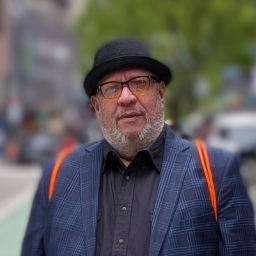
Edward Silva
Edward spent more than forty years as a computer professional — long enough to pick up one useful occupational habit: when somebody hands you a summary, go and read the actual documentation. He started The Second Half Guide after noticing that most writing aimed at people his age was either talking down to him or quietly selling him something, and that the plain facts — the dates, the thresholds, the dollar figures — were somehow the hardest part to find.
He's married, with two grown sons, both married themselves. He is not a financial adviser, an attorney or an insurance agent, and this site doesn't tell you what to do with your money. It tells you what the rules actually say, and links to where he checked.